


Sustainability Attitudes
Encouraging people towards more sustainable purchasing
“Just shifting the mindset … that your choices do have an impact.”
A qualitative study exploring sustainability attitudes, motivations, barriers, and opportunities to encourage more sustainable purchasing among less‑engaged consumers.
The project
Background
In 2024 Research Ink conducted the Australian Consumers’ Sustainability Study which was a survey of Australians’ purchasing decisions in the context of sustainability. They identified four attitudinal segments: Eco Champions, Eco Whelmed, Passive Observers, and Sustainability Sceptics.
Building on these findings, MMResearch undertook qualitative research to better understand how to shift less-engaged segments towards taking more sustainable action. Specifically, we were interested in conducting follow-up qualitative research focusing on the Eco Whelmed (Concerned) and Passive Observer (Passive) segments to understand what it would take to shift these consumers towards more sustainable purchasing, and to provide actionable insights for encouraging more sustainable purchase behaviours.
Research objectives
Provide insights into the attitudes of the Concerned and Passive segments.
Explore motivations and barriers to sustainable purchasing.
Assess confidence and trust in product claims and promotions.
Explore perceptions of personal impact and responsibility.
Identify opportunities for behaviour change.
What we did
We conducted four online group discussions with 24 participants aged 18–54. Groups were segmented by age, gender, location, and sustainability attitudes (Concerned vs Passive). All participants were at least partly responsible for household shopping and expressed at least some environmental concern.
Participants discussed four key purchase categories:
Food & Drink
Household/Cleaning Products
Personal Care/Beauty
Clothing & Footwear
What we learned
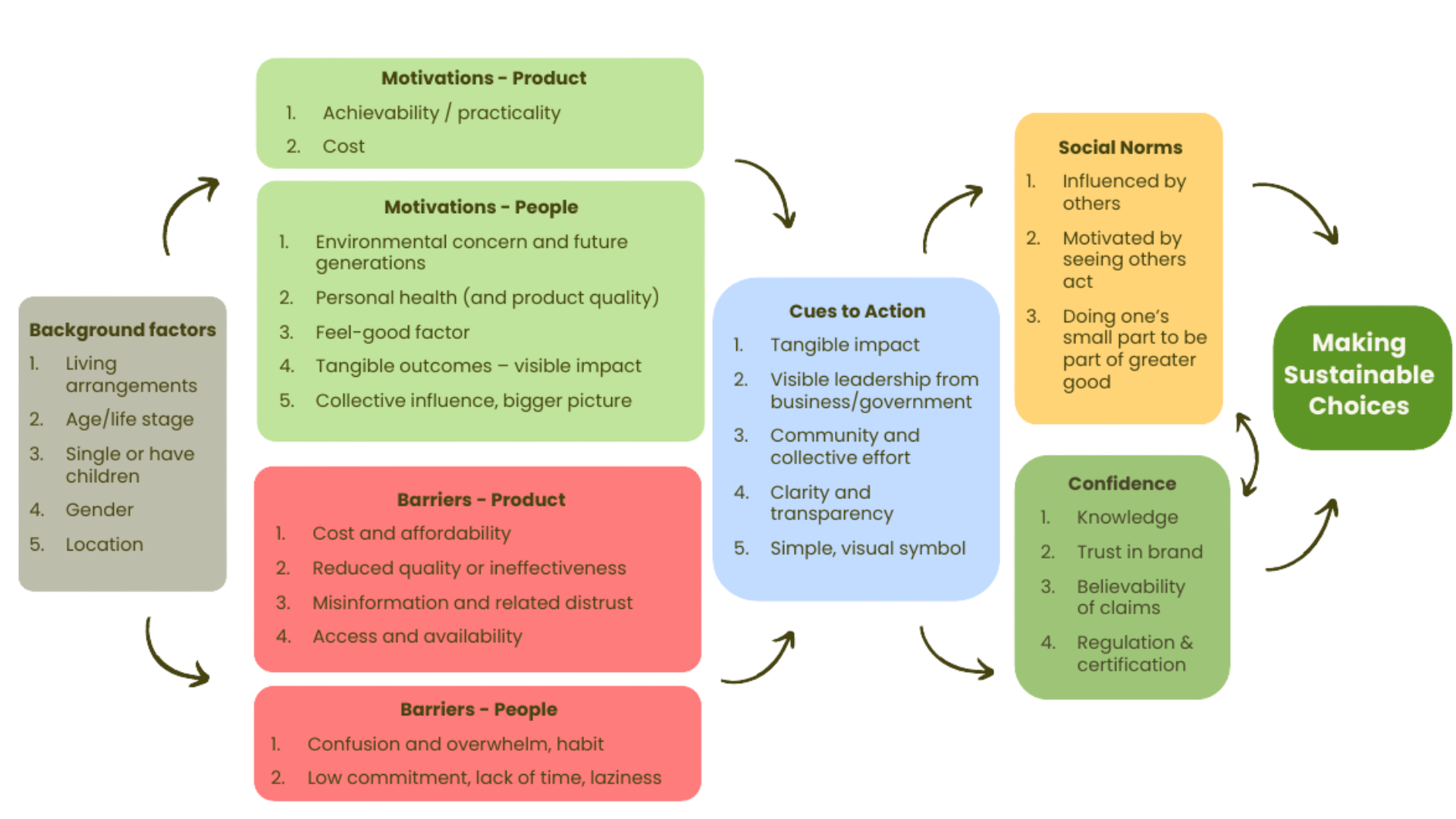
Based on this qualitative research, we developed a model to illustrate how consumers navigate sustainable purchasing decisions. The model brings together the key influences identified across the research and shows how motivations, barriers and external cues interact to shape behaviour, within the context of people’s lives and circumstances.
Background Factors
Demographic and life-stage characteristics that shape how people experience sustainability. These factors influence the relative importance of motivators and barriers.
Motivations
Drivers that encourage sustainable choices, related to both the product and how it is marketed, and individual values and attitudes.
Barriers
Factors that discourage sustainable choices, also linked to product-related issues, and individual constraints.
Cues to Action
External prompts that influence behaviour, such as advertising, marketing, media, and in-store cues. These interact with motivators, barriers, social norms and confidence.
Social Norms
Perceptions of what others are doing, which shape individual behaviour. Social norms can also be leveraged within marketing messages.
Confidence (self-efficacy)
The factors that affect whether we believe we are able to make sustainable choices. Confidence is also affected by perceptions of social norms.

Cues to action:
What would encourage more sustainable choices?
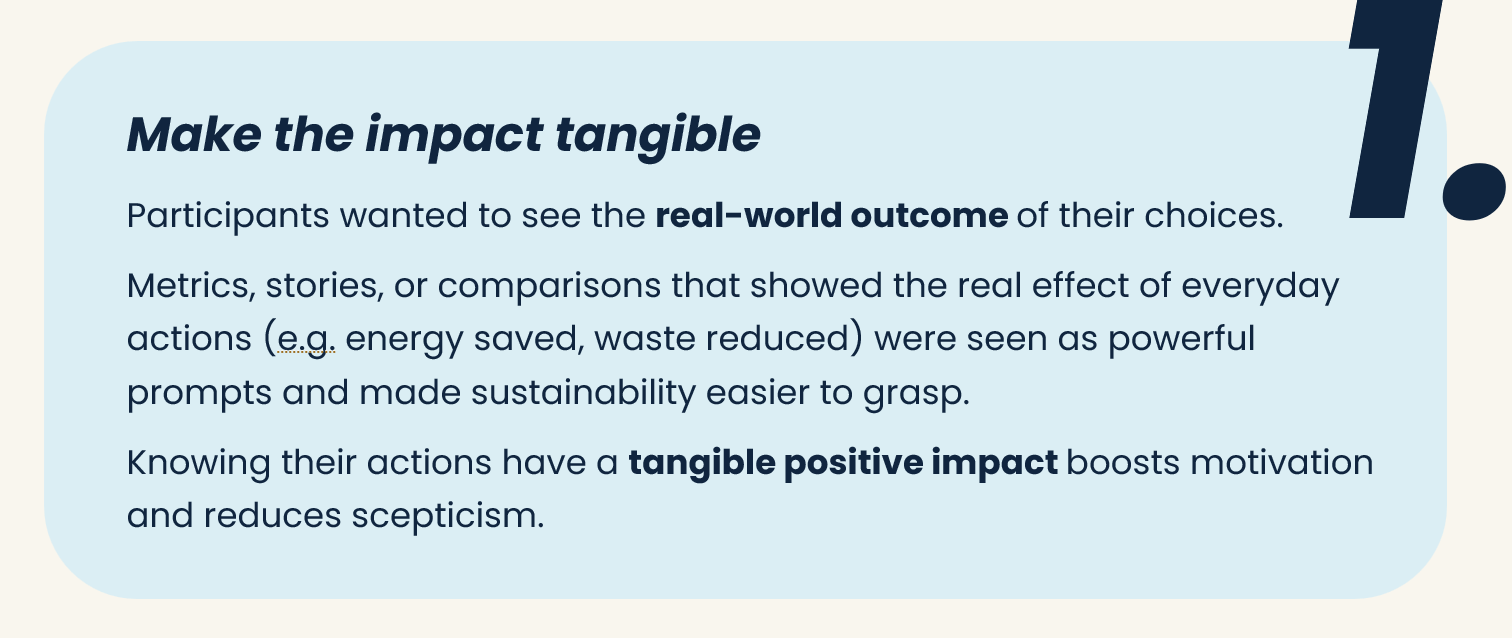
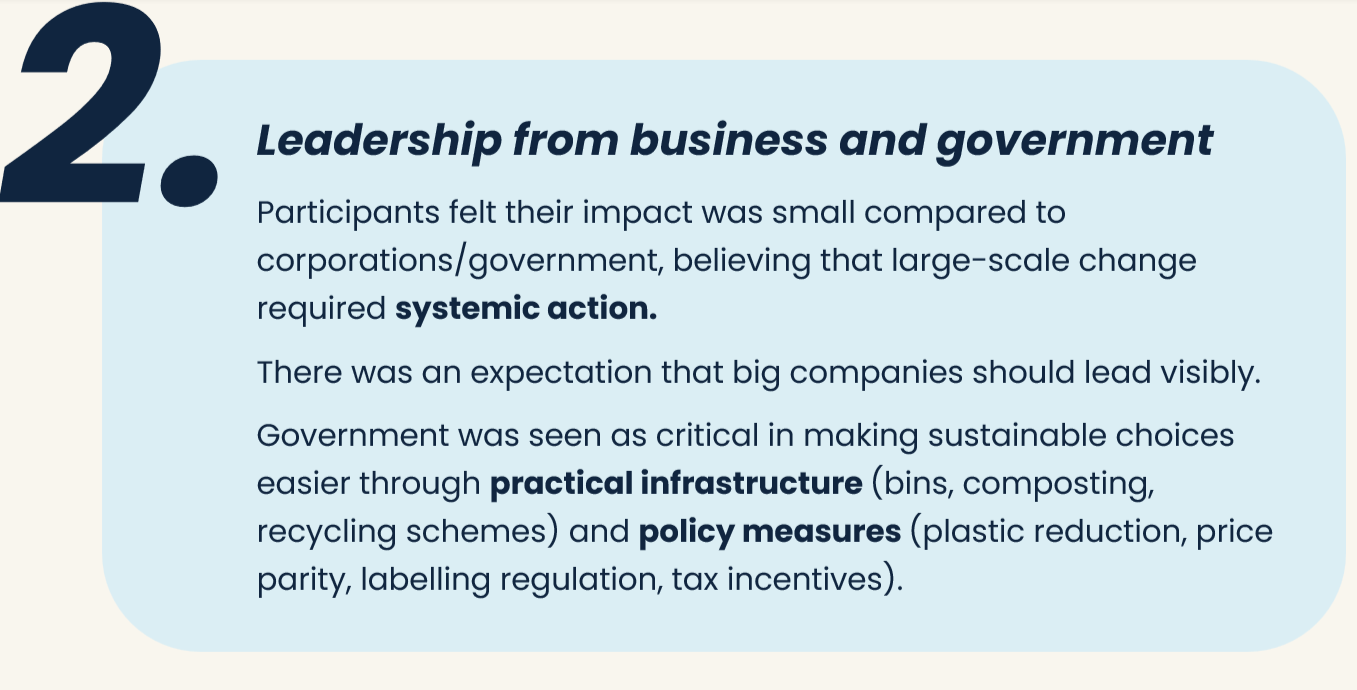
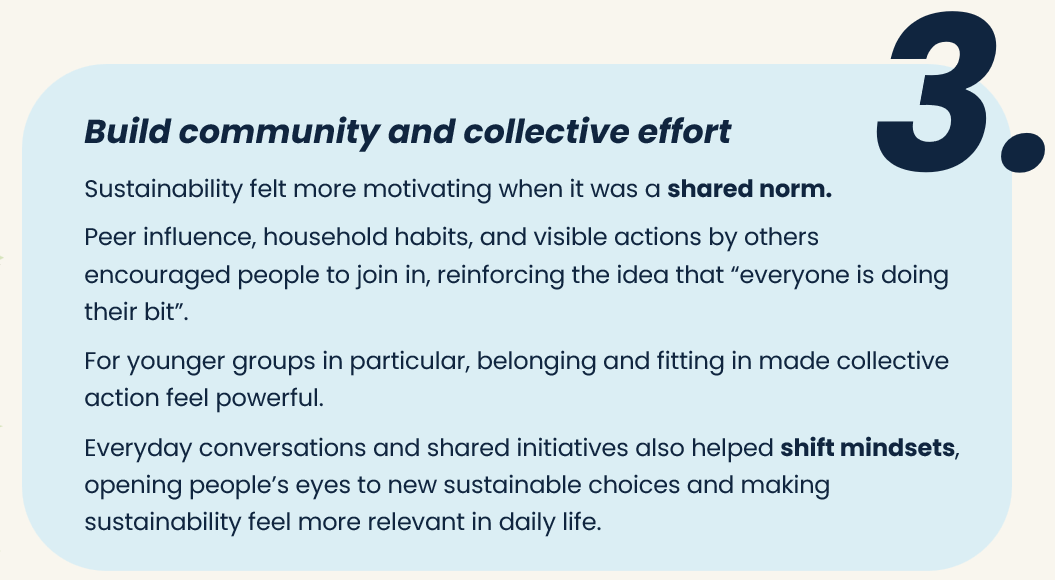
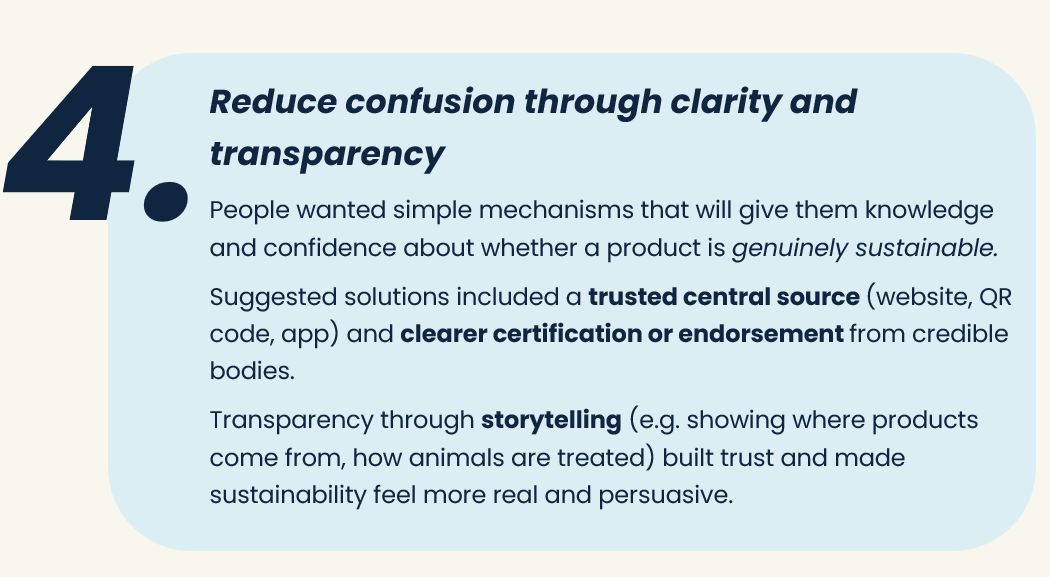
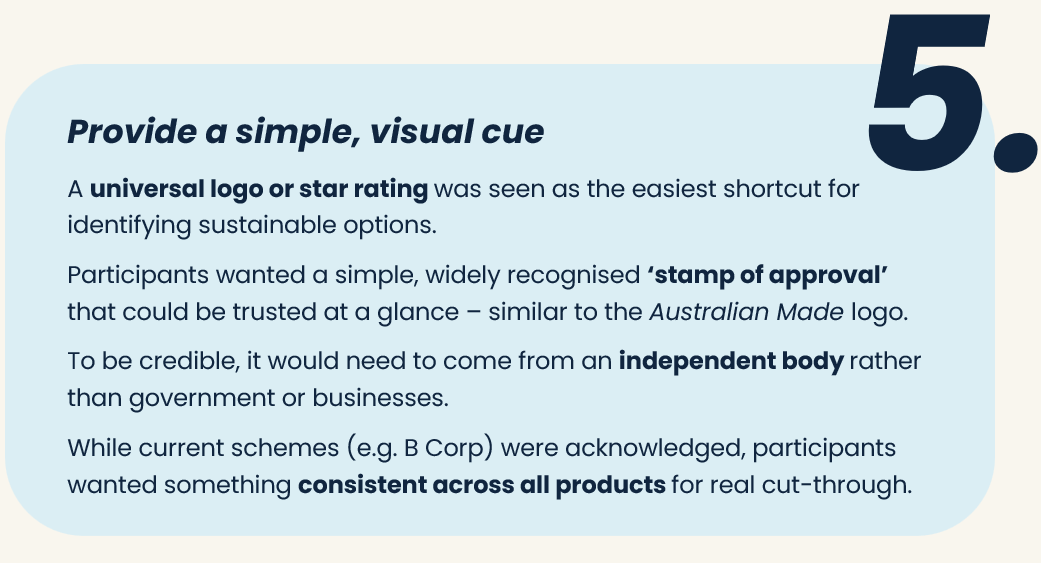
To shift the Concerned and Passive segments towards more sustainable behaviours, this research highlighted five key areas for action:
Next steps

The research was compiled into a full report titled Sustainability Attitudes: Shifting consumers towards more sustainable purchasing, outlining our findings on sustainability perceptions, personal relevance, motivations, barriers, social norms and influences, responsibility and impact, confidence, and response to marketing, as well as a section on facilitating sustainable purchases.